
Repair may still fit
- The tank itself appears sound
- The failed part is serviceable
- Problems are isolated rather than recurring
- The system still meets household demand
Replacement makes sense when the current heater is no longer a good candidate for repair, the tank itself is compromised, failures keep returning, or the existing system no longer fits the household. The goal is not simply to remove an old heater—it is to decide whether replacement is justified and what should take its place.
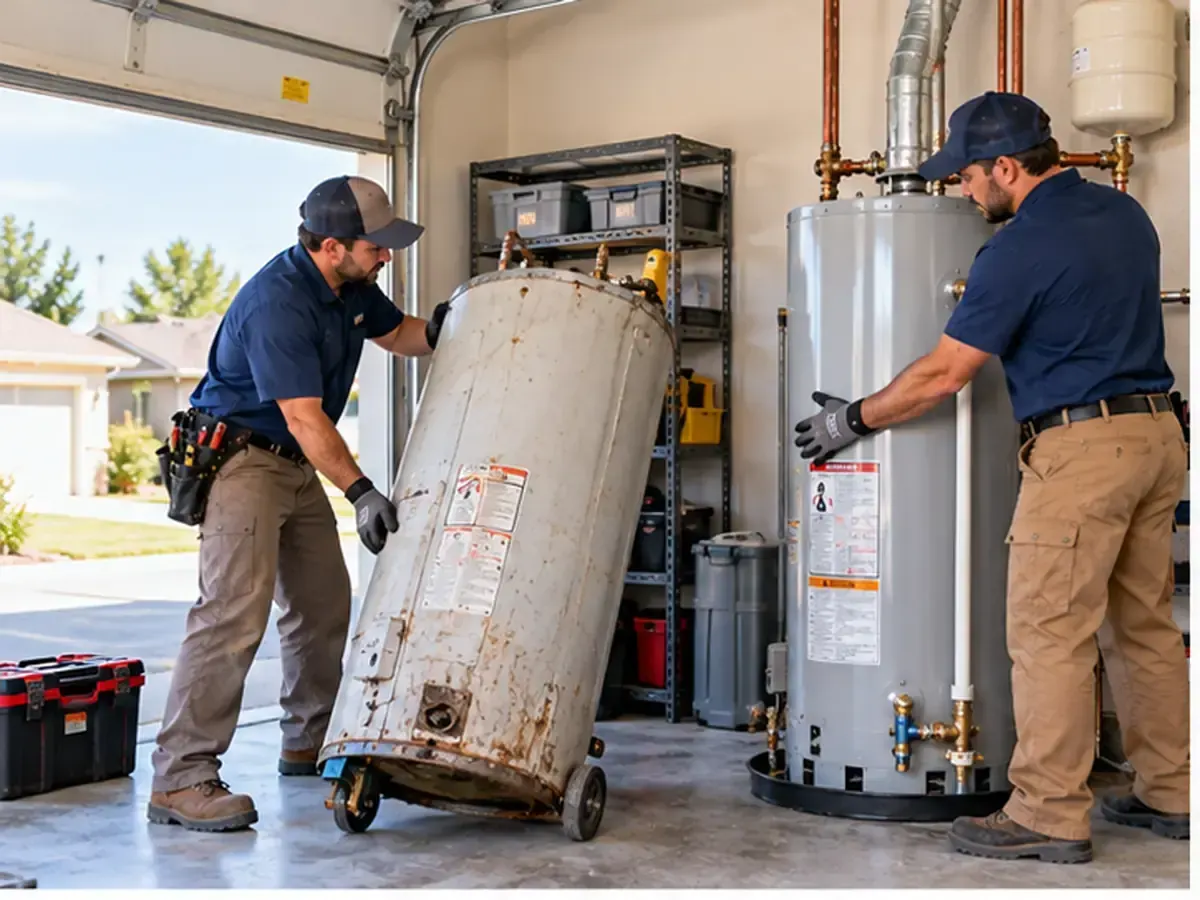
Not every water-heater problem requires a new unit. A failed thermostat, heating element, ignition part, gas-control component, valve or serviceable connection can be very different from a tank that is leaking through the vessel itself.
Some symptoms justify diagnosis first. Others raise the likelihood that the heater itself is reaching the end of useful service.
Water from a fitting or valve may be repairable. Water escaping from the storage tank itself is a different problem.
Corrosion around the tank, fittings or hot-water side can help show how much condition has deteriorated.
Frequent repairs can change the economics even when each individual problem is technically serviceable.
If the system no longer keeps up with real household demand, replacement can solve more than a single failed part.
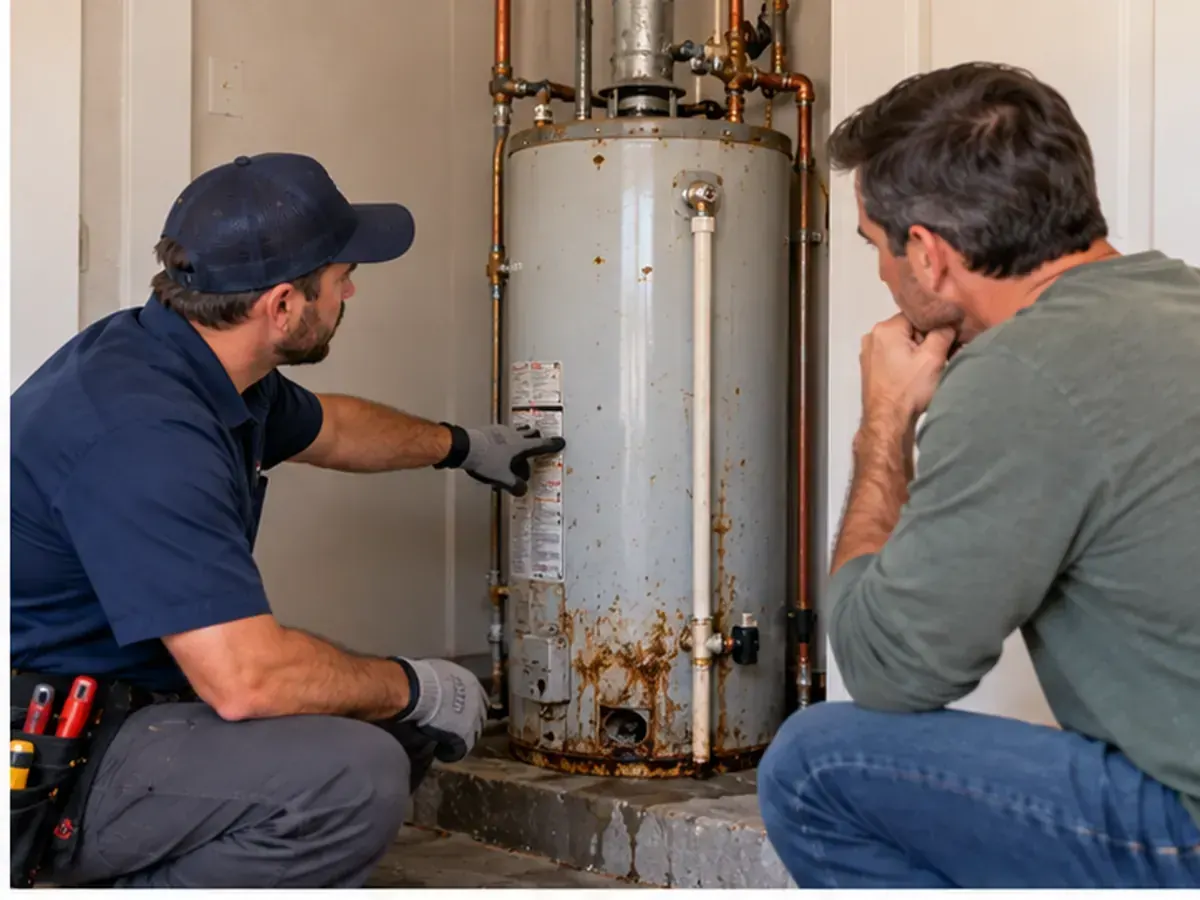
No hot water, noise or inconsistent temperature can come from repairable components. Replacement becomes more compelling when the storage vessel itself is compromised, corrosion is extensive, or the heater has entered a cycle of repeat failures.
A popping sound, lukewarm water or a single control failure does not automatically mean the tank must go. Diagnose the actual failure first.
The existing heater is useful evidence, but it should not be the only sizing rule. If the old system met demand most of the time, it can be a practical reference. If the household routinely ran out of hot water, replacing it with the same capacity can repeat the problem.
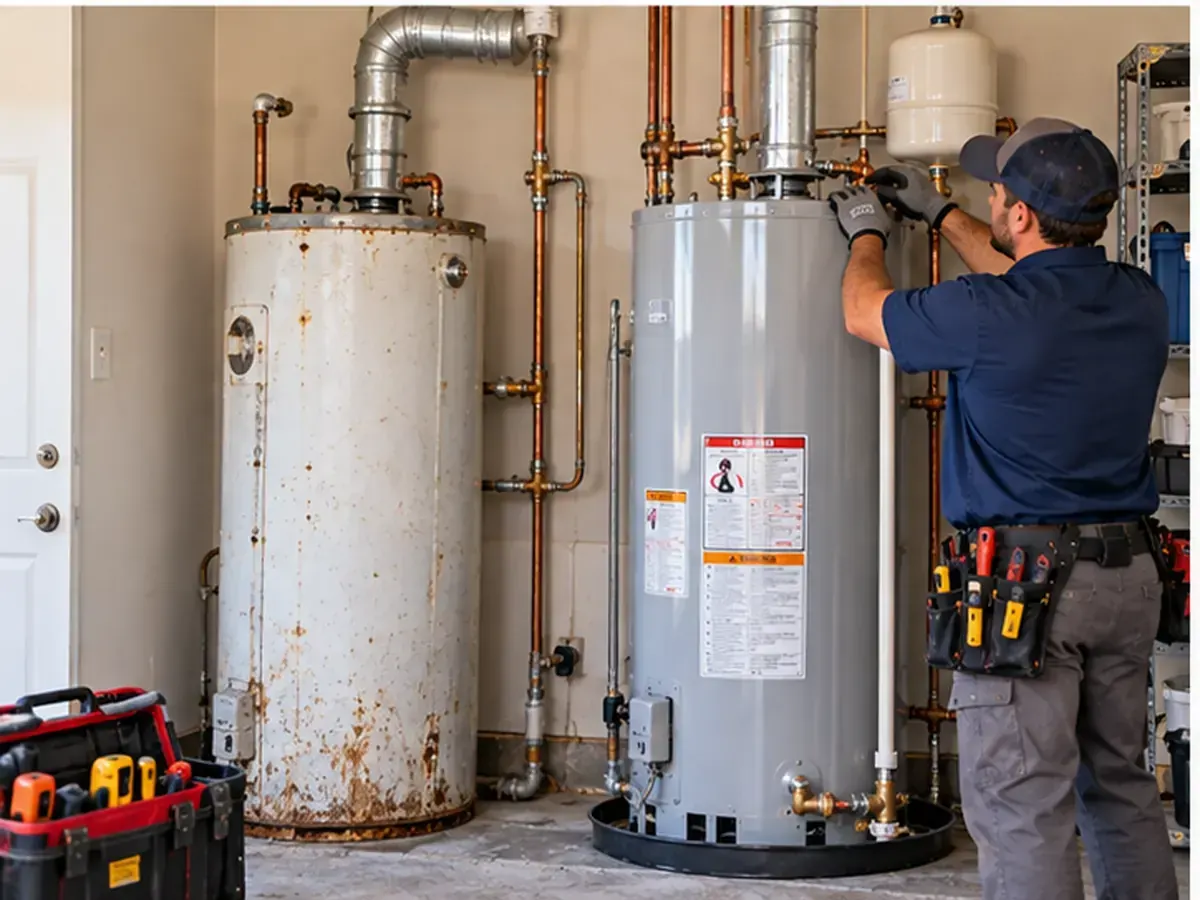
A like-for-like replacement can still uncover supporting work around the old unit. The surrounding plumbing, venting, electrical connection, drain path and access conditions all matter.
Review shutoffs, supply lines, relief discharge, visible corrosion and previous modifications.
Gas venting or electric circuit conditions may need attention when the replacement model changes.
The old heater must come out and the new heater must fit through the same path or an alternate one.
Drain pan, relief discharge and surrounding conditions should be considered as part of the replacement.
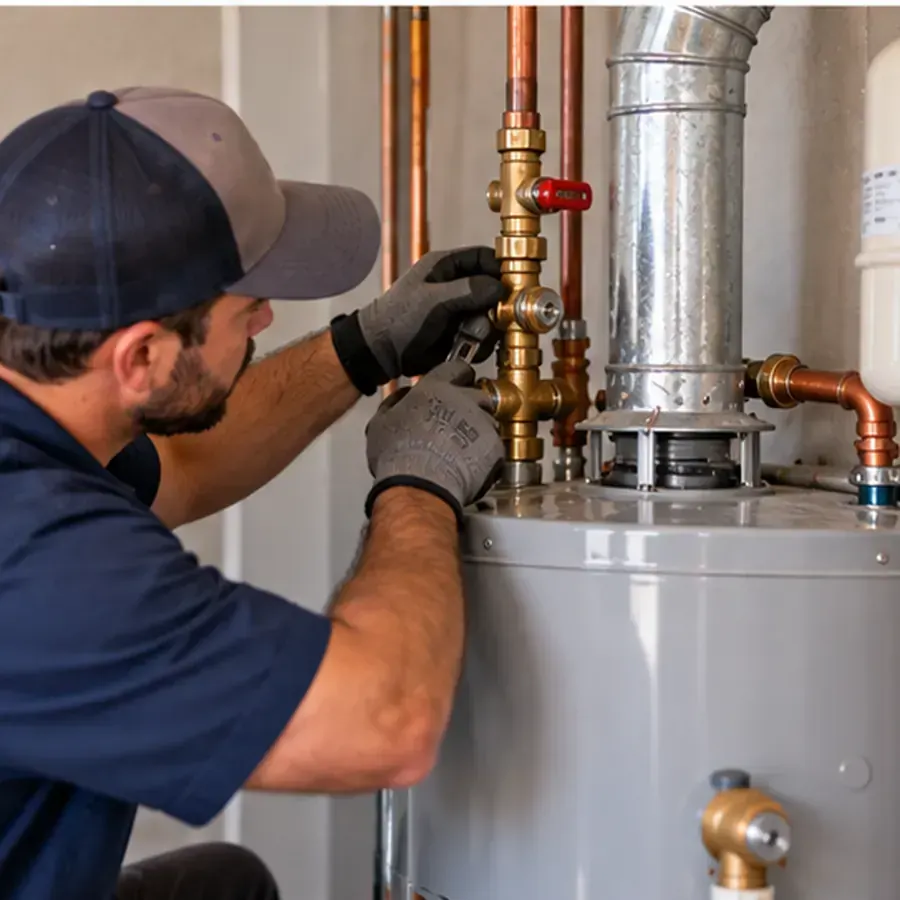
The City of Schertz identifies replacement of water heaters as plumbing work requiring a permit. Work performed under a permit also requires inspection.
For applicable non-exempt electrical work, permit applications submitted on or after September 1, 2026 must comply with the 2026 National Electrical Code.
Schertz also lists electric water heaters among the eligible residential projects for its Virtual Inspection Program, subject to the city's process and inspector determination.
The equipment price is only one part of the project. A straightforward like-for-like replacement is different from changing fuel type, relocating the unit or converting to tankless.
Tank, tankless, gas, electric, capacity and efficiency level.
Old-unit removal path, closet or garage access, working clearance and disposal.
Plumbing, gas, electrical, venting, drainage or relocation work.
Applicable Schertz permit and inspection requirements are part of the project.
Consider what failed, whether the tank itself is sound, how often problems have returned, whether the current size still works for the household, and whether a repair would leave you with a system that still does not fit the home.
Replacement should follow a clear decision process rather than starting with a new appliance order.
Identify whether the problem is a repairable component, connection or the tank itself.
Look at corrosion, leak location, repair history, age and current performance.
Decide whether the current size and recovery still fit actual hot-water use.
Match capacity, first-hour performance, fuel type, dimensions and home setup.
Identify any plumbing, venting, electrical, drainage or access changes.
Account for the applicable Schertz permit and inspection process.
Disconnect the old unit, prepare the area and install the new system.
Check operation, connections and leaks, then complete required inspection.
Practical questions to answer before removing the old unit.
Homes in Greenshire, Woodland Oaks, Forest Ridge, Carolina Crossing, Jonas Woods, Rhine Valley, The Crossvine, Homestead, Riata and Scenic Hills can have different equipment locations, utility setups and access constraints.
The neighborhood name does not decide the replacement. The actual heater, home layout, utilities and household demand do.Look at the failure itself, tank condition, age, repeat repair history, household demand and whether the current setup still fits the home. A repairable component failure is different from a leaking or structurally compromised tank.
Yes. The City of Schertz identifies replacement of water heaters as plumbing work requiring a permit, and permitted work requires inspection.
Not automatically. If the current size meets household demand it can be a useful reference, but tank capacity, first-hour rating, household usage and available space should all be considered.
Possibly. A conversion should be evaluated as a larger installation project because gas or electrical capacity, venting, drainage, flow demand and installation location may change.
It depends where the leak originates. A valve, fitting or connection may be repairable, while a leak from the tank body itself generally points toward replacement.
Photos of the full heater and surrounding area, the rating label, fuel type, tank size, leak location if visible, and a short description of the symptoms are useful starting points.
Start with the main Water Heater Repair page, or compare every live service from the Services hub.
Tell us what the current heater is doing, where it is installed, and whether you are considering a like-for-like replacement or a system change.