
No Hot Water
- Breaker or power-supply issue
- High-limit protection tripped
- Upper thermostat or control problem
- Heating-element failure
Electric water-heater problems often come down to power, controls, thermostats, heating elements, high-limit protection or the condition of the tank itself. The useful first step is to identify whether the heater has no power, no heat, partial heat, repeated reset trips or a separate leak problem.
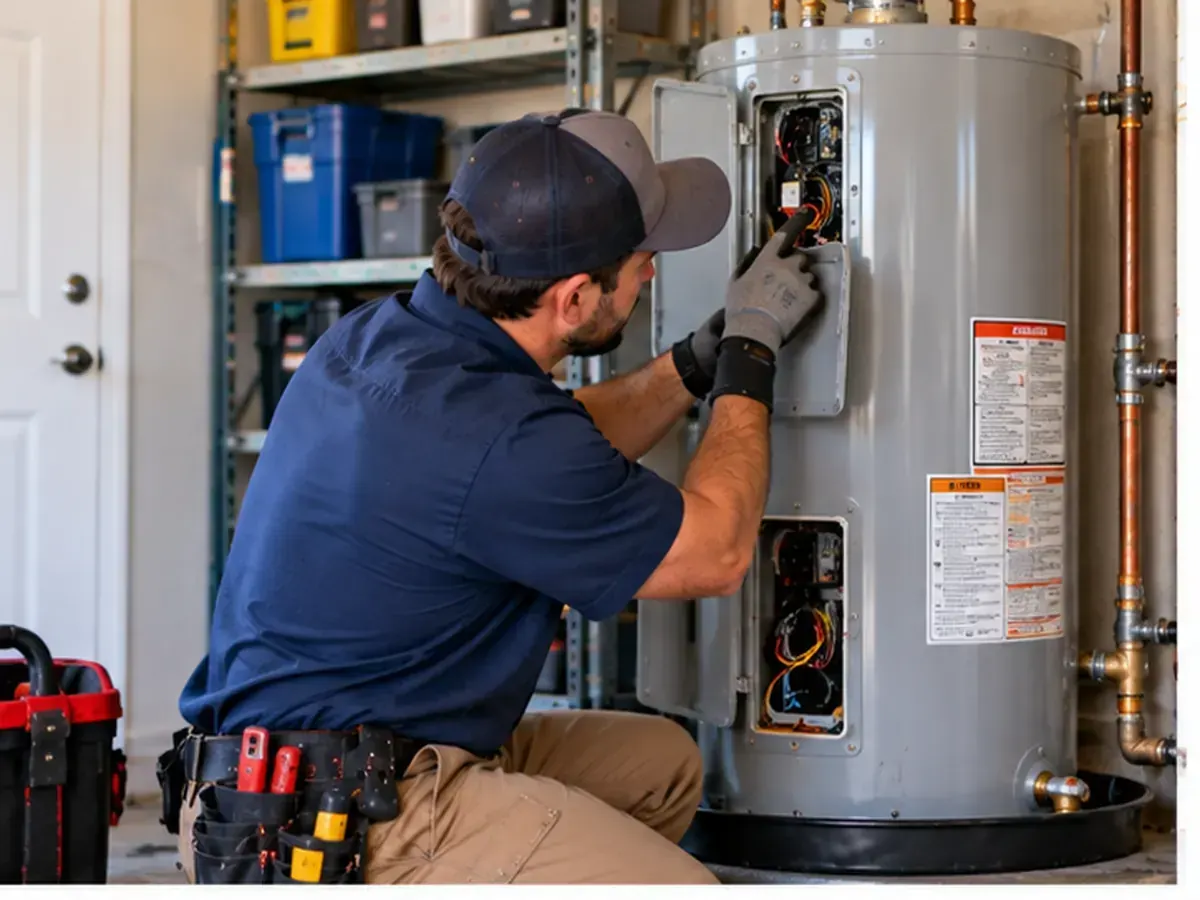
Electric water-heater problems are easier to diagnose when the exact behavior is clear. “No hot water” and “not enough hot water” often point in different directions.
Most standard electric storage heaters rely on thermostats, heating elements and safety controls working together.
A failed upper or lower element can produce no heat, partial heat or poor recovery depending on the system and failure.
Upper and lower thermostats control when the elements receive power and can affect temperature and recovery.
A tripped safety reset can stop heating, but repeated trips should be diagnosed rather than simply reset again.
Loose, damaged or overheated wiring inside the heater can create operating and safety problems that need proper diagnosis.
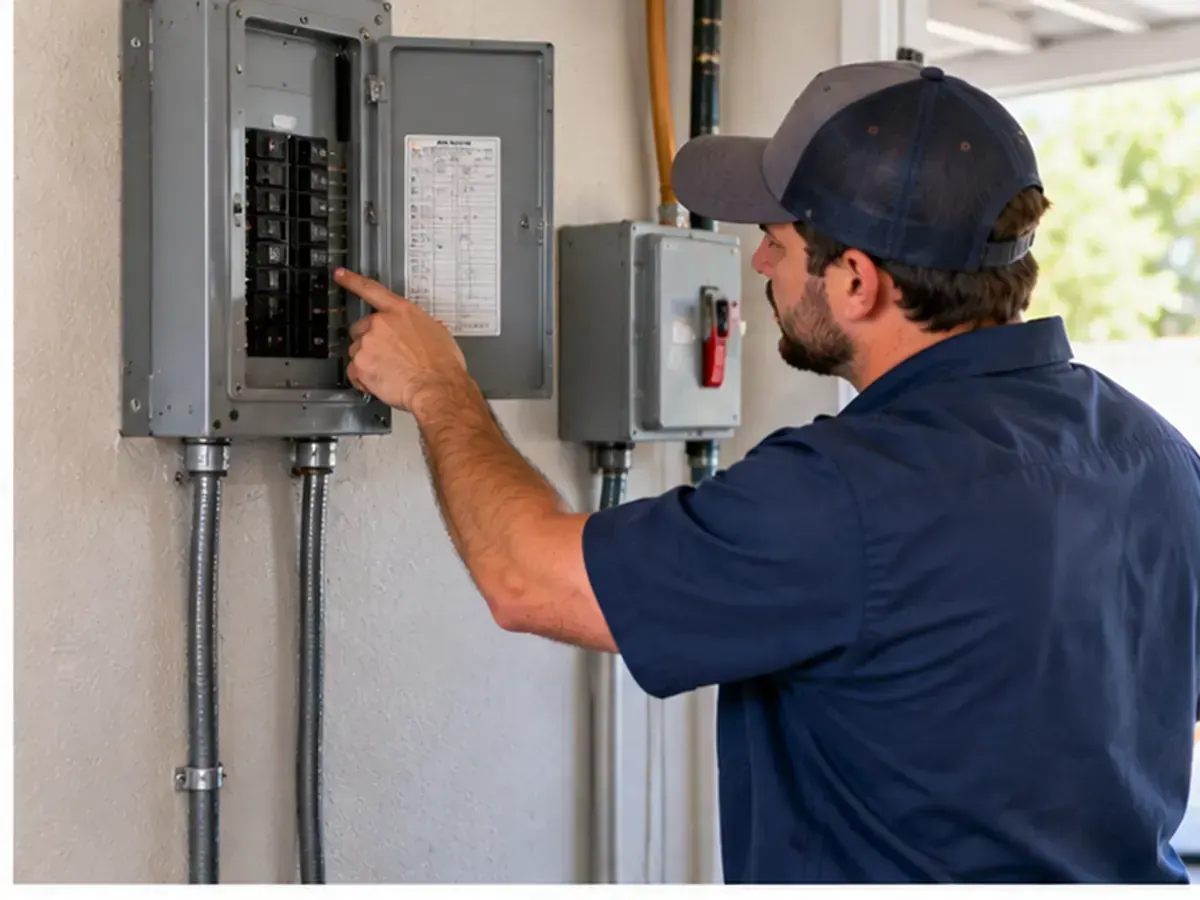
An electric water heater depends on a dedicated electrical supply. If the breaker is tripped, the heater loses power—but the important question is why it tripped. The cause may be inside the heater, in the circuit, or related to the electrical connection.
Repeated trips can signal a real electrical fault. The underlying cause should be identified before the heater is returned to service.
Many standard electric tank water heaters use upper and lower heating elements. When one part of that heating sequence fails, the heater may still make some hot water but recover slowly or run out much sooner than expected.
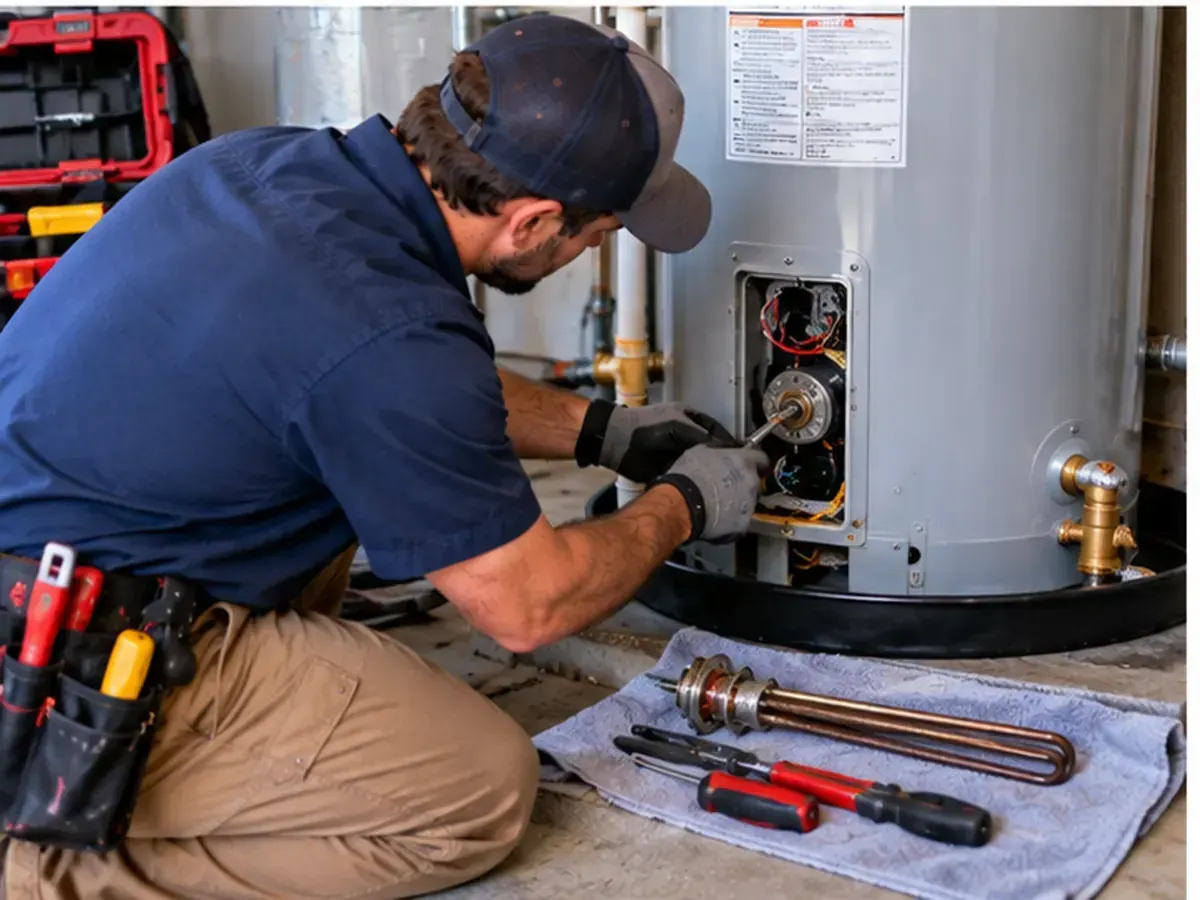
An electric heater can have a heating problem and a separate plumbing problem at the same time. Leak location matters because a serviceable fitting is different from a leaking storage tank.
Water around an element opening can involve the seal, mounting area or nearby tank condition.
Hot and cold connections, shutoffs and fittings can leak independently of the tank itself.
Water from the relief-discharge path should be evaluated as a pressure, temperature or valve-related condition.
A compromised storage tank changes the conversation from component repair toward replacement.
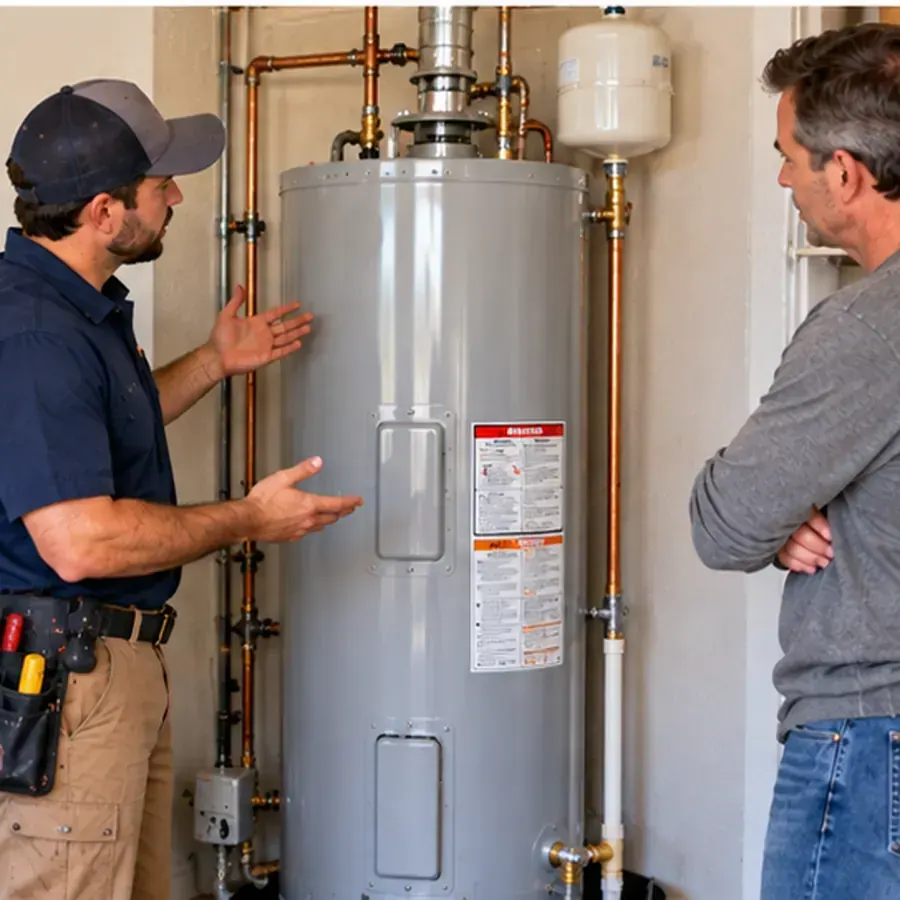
The City of Schertz requires a plumbing permit for water-heater replacement. If repair or replacement also includes non-exempt electrical work, the electrical portion can trigger separate permit requirements.
For applicable non-exempt electrical work submitted on or after September 1, 2026, Schertz applies the 2026 National Electrical Code.
Schertz also lists electric water heaters among the eligible residential projects for its Virtual Inspection Program, subject to the city's inspection process and inspector determination.
Electric water heaters can often be repaired when the tank is sound and the problem is limited to a thermostat, heating element, wiring connection or control. Replacement becomes stronger when the vessel itself is compromised or failures keep returning.
Often repairable when the tank itself remains in good condition.
Can often be diagnosed and serviced without replacing the complete heater.
Recurring failures can change whether continued repair remains practical.
A leaking or structurally compromised tank generally shifts the decision toward replacement.
Do not replace a sound tank because of a serviceable component problem—but do not ignore a compromised tank simply because the heater can still make some hot water.
Electric diagnosis should move logically from power supply to heater controls and then to the actual heating components.
No heat, partial heat, slow recovery, breaker trip, reset trip or leak.
Check the relevant breaker, circuit and electrical supply conditions.
Review thermostats, high-limit protection and internal wiring.
Determine whether upper or lower elements are functioning correctly.
Look for leaks, corrosion and signs the vessel itself may be compromised.
Base the decision on the actual failure and condition of the heater.
Service the failed component or system condition identified during diagnosis.
Verify heating, recovery, temperature and leak-free operation before closing the job.
Practical answers for no-heat, poor-recovery, breaker and replacement questions.
Homes in Greenshire, Woodland Oaks, Forest Ridge, Carolina Crossing, Jonas Woods, Rhine Valley, The Crossvine, Homestead, Riata and Scenic Hills can have different panel locations, heater access, equipment ages and household demand.
The neighborhood does not determine the repair. The actual heater, electrical supply and symptoms do.No hot water can relate to power supply, breaker conditions, high-limit protection, thermostats, heating elements or internal wiring. The system should be diagnosed before replacing parts.
Partial hot-water output can occur when one heating element or thermostat is not working correctly, when demand exceeds available recovery, or when sediment and other system conditions affect performance.
Repeated high-limit trips can point to thermostat, wiring, element or control issues. Repeatedly resetting the heater without diagnosing the cause is not a proper repair.
Often, yes—when diagnosis confirms the element is the problem and the tank itself remains sound.
Yes. Schertz requires a plumbing permit for water-heater replacement. If non-exempt electrical work is also involved, electrical permit requirements can apply.
Schertz lists electric water heaters as an eligible residential project type under its Virtual Inspection Program, subject to the city's inspection process.
Start with the main Water Heater Repair page, or compare every live service from the Services hub.
The most useful starting point is the exact symptom: no heat, some heat, slow recovery, repeated breaker/reset trips or visible leakage.