
Gas Water Heater Repair
- Pilot or ignition problems
- Burner does not stay on
- Gas-control or thermostat issues
- Inconsistent hot water
- Venting or draft concerns
Gas water heaters depend on more than the tank. Reliable operation also depends on ignition, burner condition, gas control, fuel supply, venting, combustion air and the surrounding installation. Whether the current heater will not stay lit or you are planning a new gas unit, the service should start with the actual system conditions.
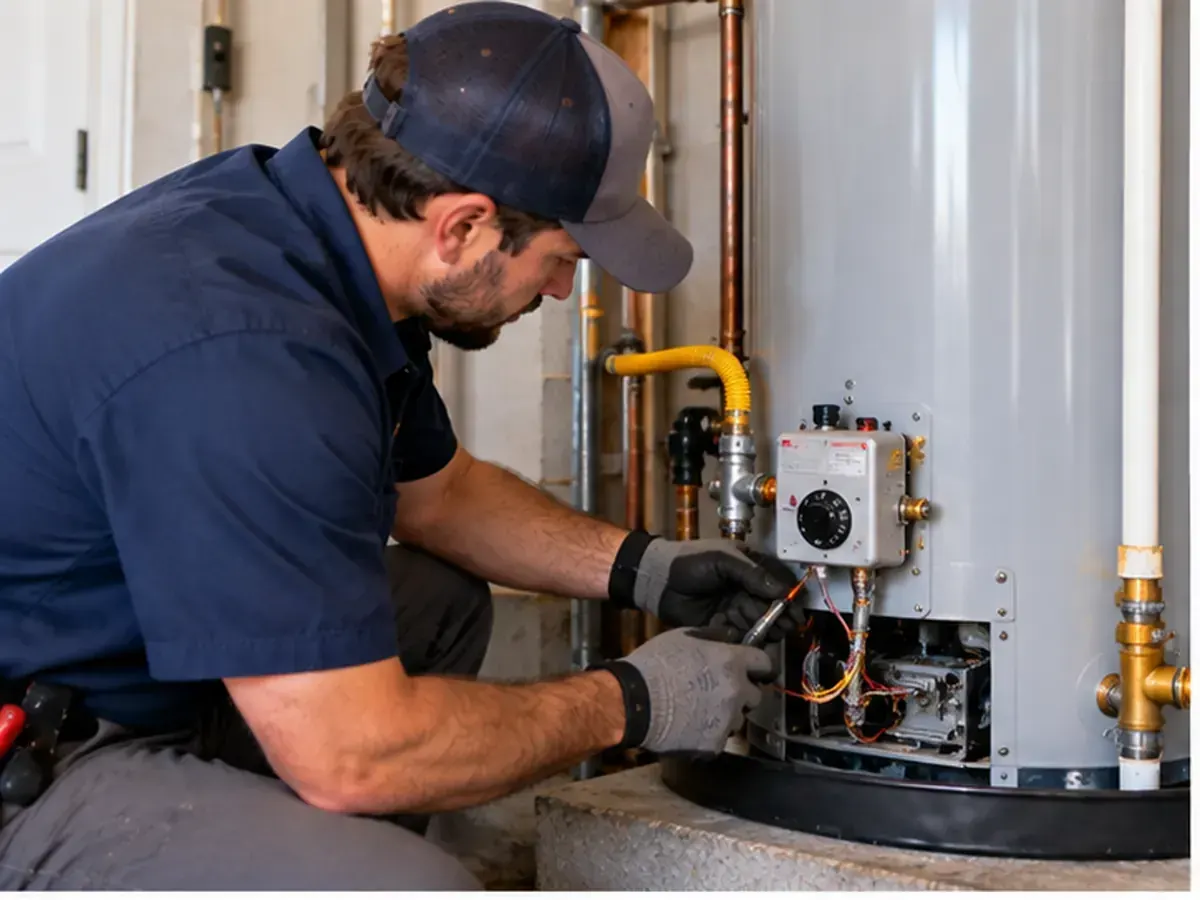
A gas water-heater call should separate a repairable operating problem from a tank or system that no longer makes sense to keep. The same symptom can lead to very different decisions depending on tank condition, gas-system setup and repair history.
The symptom helps define the diagnostic path. Gas water-heater problems should not be reduced to “replace the pilot” without checking the rest of the system.
Ignition components, flame sensing, gas control, draft conditions or other operating factors may be involved.
Fuel supply, gas control, thermostat demand, ignition and burner condition can all be relevant.
Intermittent heating can relate to burner cycling, controls, sediment, venting or household demand.
Combustion and venting conditions deserve attention because they can point to a larger operating or safety issue.
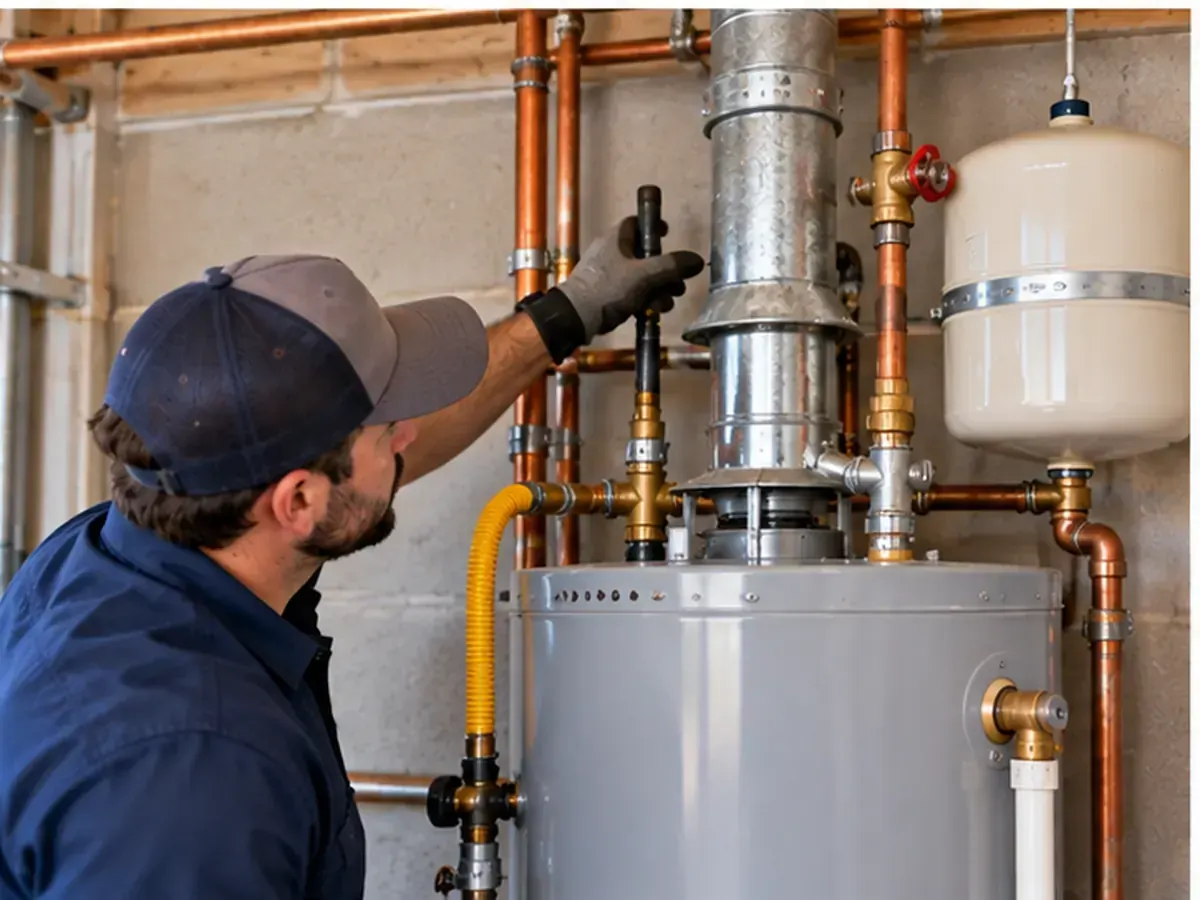
A gas water heater needs appropriate fuel supply and a venting setup suited to the appliance and installation. Problems around draft, combustion air, vent connections or gas supply can affect operation and safety.
Do not attempt to diagnose the leak yourself. Avoid ignition sources, leave the area if the odor is strong or the situation feels unsafe, and contact the gas utility or emergency services as appropriate.
A new gas heater should fit the household's actual hot-water demand, the available installation space, the gas supply and the venting configuration. Replacing the old heater with the same gallon size is not always the best answer.
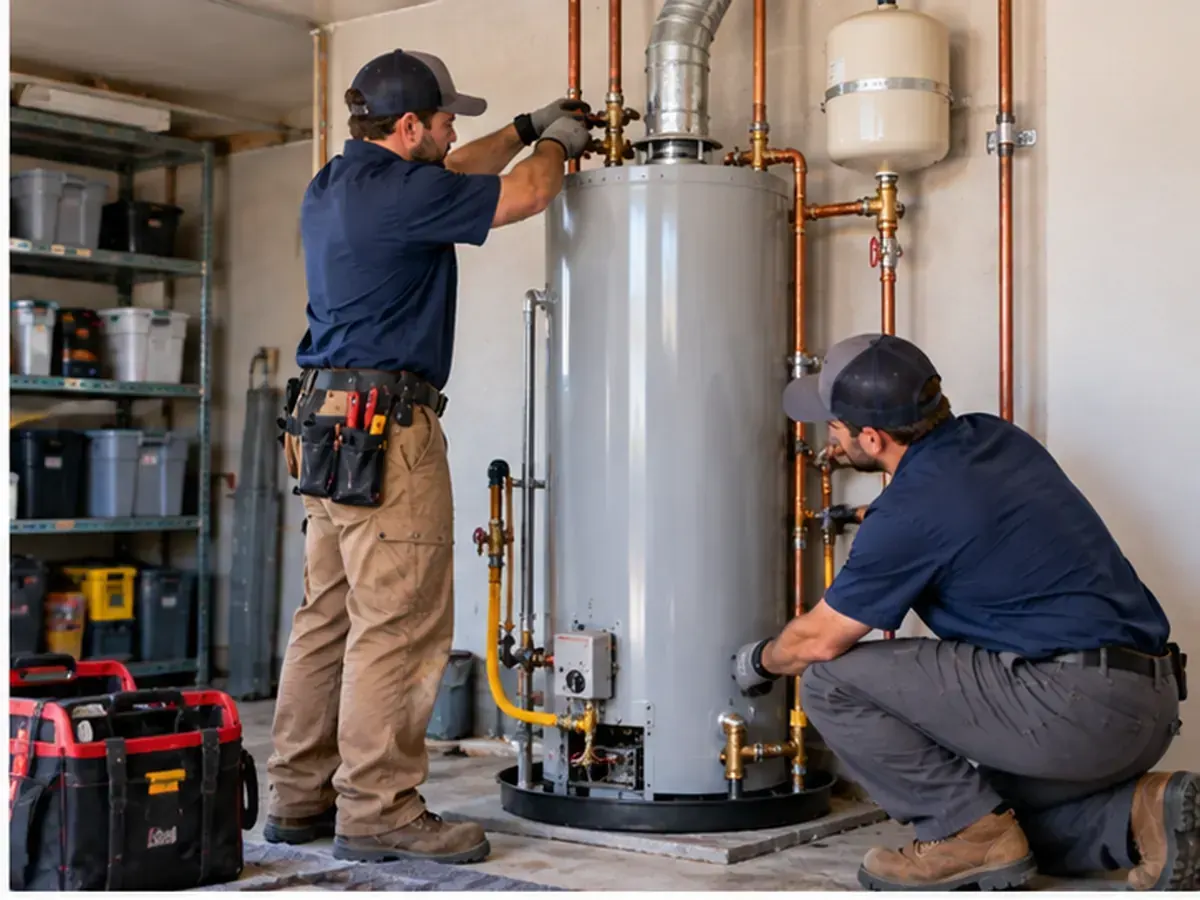
Gas water-heater repair or installation can be affected by more than the heater itself. The surrounding gas piping, venting, water connections, drain path and access should be evaluated as part of the project.
Confirm the available gas supply and piping are appropriate for the heater being serviced or installed.
Review the vent path, connection, draft conditions and compatibility with the selected appliance.
Check shutoffs, supply connections, corrosion, relief discharge and previous modifications.
The heater needs practical removal, installation and future service access around the equipment.
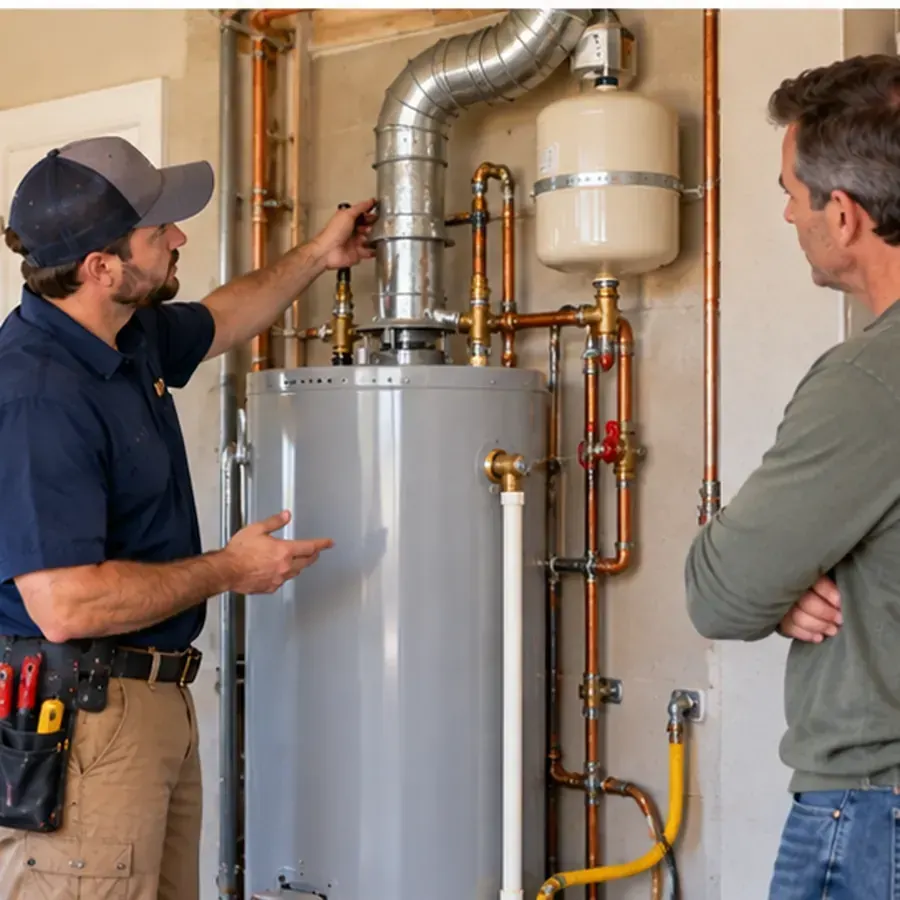
The City of Schertz states that all gas repairs require a permit. It also identifies water-heater replacement and plumbing in new installations as permit-required plumbing work.
The city notes that gas work is dangerous and should be handled by a Texas-licensed plumbing contractor. Schertz enforces adopted gas, plumbing and mechanical codes through its Inspections Division.
If a project also includes non-exempt electrical work, applications submitted on or after September 1, 2026 must comply with the 2026 National Electrical Code.
Gas water heaters can often be repaired without replacement. The decision changes when the tank itself is compromised, corrosion is significant, repairs keep returning or the heater no longer fits household demand.
Ignition components, controls, valves or burner-related parts may be serviceable depending on diagnosis.
A leaking or structurally compromised tank points more strongly toward replacement.
Recurring repairs can change whether continued repair remains practical.
Replacement may also make sense when the current capacity or recovery no longer meets demand.
A new heater will not correct an undersized gas supply, poor venting or a problematic installation unless those issues are addressed as part of the project.
The exact path depends on whether the heater is being repaired or a new gas unit is being installed.
Pilot, ignition, burner, temperature, leak, venting or other operating issue.
Check for leakage, corrosion and signs that the vessel itself may be compromised.
Evaluate the gas supply, shutoff, burner area, vent connection and draft path.
Base the next step on the actual failure, repair history and household needs.
Identify any piping, venting, drainage, access or related changes.
Account for applicable Schertz gas and plumbing permit requirements.
Complete the approved service work and appropriate connections.
Verify ignition, burner operation, temperature, venting behavior and leak-free connections.
Practical answers for repair, replacement and new gas-water-heater installation.
Homes in Greenshire, Woodland Oaks, Forest Ridge, Carolina Crossing, Jonas Woods, Rhine Valley, The Crossvine, Homestead, Riata and Scenic Hills can have different gas piping, venting, equipment locations and household demand.
The neighborhood does not determine the correct repair or installation. The actual heater and home setup do.Pilot or ignition problems can involve the ignition system, flame-sensing components, gas control, burner condition, draft or other operating conditions. The specific cause should be diagnosed.
Intermittent hot water can relate to ignition, burner operation, gas controls, venting, thermostat settings, sediment or other system conditions. Diagnosis should focus on the actual operating pattern.
Schertz requires plumbing permits for water-heater replacement and new plumbing installations, and the city states that all gas repairs require a permit.
Not automatically. Tank capacity, first-hour performance, household demand, available space, venting and gas-supply suitability should be considered.
Often, yes. Ignition, control or burner-related problems may be repairable when the tank itself remains sound. A leaking tank body or significant corrosion changes the decision.
Treat a suspected gas leak as a safety issue. Avoid ignition sources, leave the area if the odor is strong or the situation feels unsafe, and contact the gas utility or emergency services as appropriate rather than attempting a repair yourself.
Start with the main Water Heater Repair page, or compare every live service from the Services hub.
For repair, describe the ignition or heating problem. For installation, tell us about the current heater, household demand and the existing gas/venting setup.