
Tankless Repair
- Error codes or shutdowns
- No ignition or intermittent ignition
- Hot-and-cold temperature swings
- Weak hot-water flow
- Scale or maintenance issues
Tankless systems heat water on demand, but good performance still depends on flow, temperature rise, gas or electrical capacity, venting, controls and maintenance. Whether an existing unit is showing an error code or you are planning a tank-to-tankless conversion, the system should be evaluated around the home—not just the appliance.
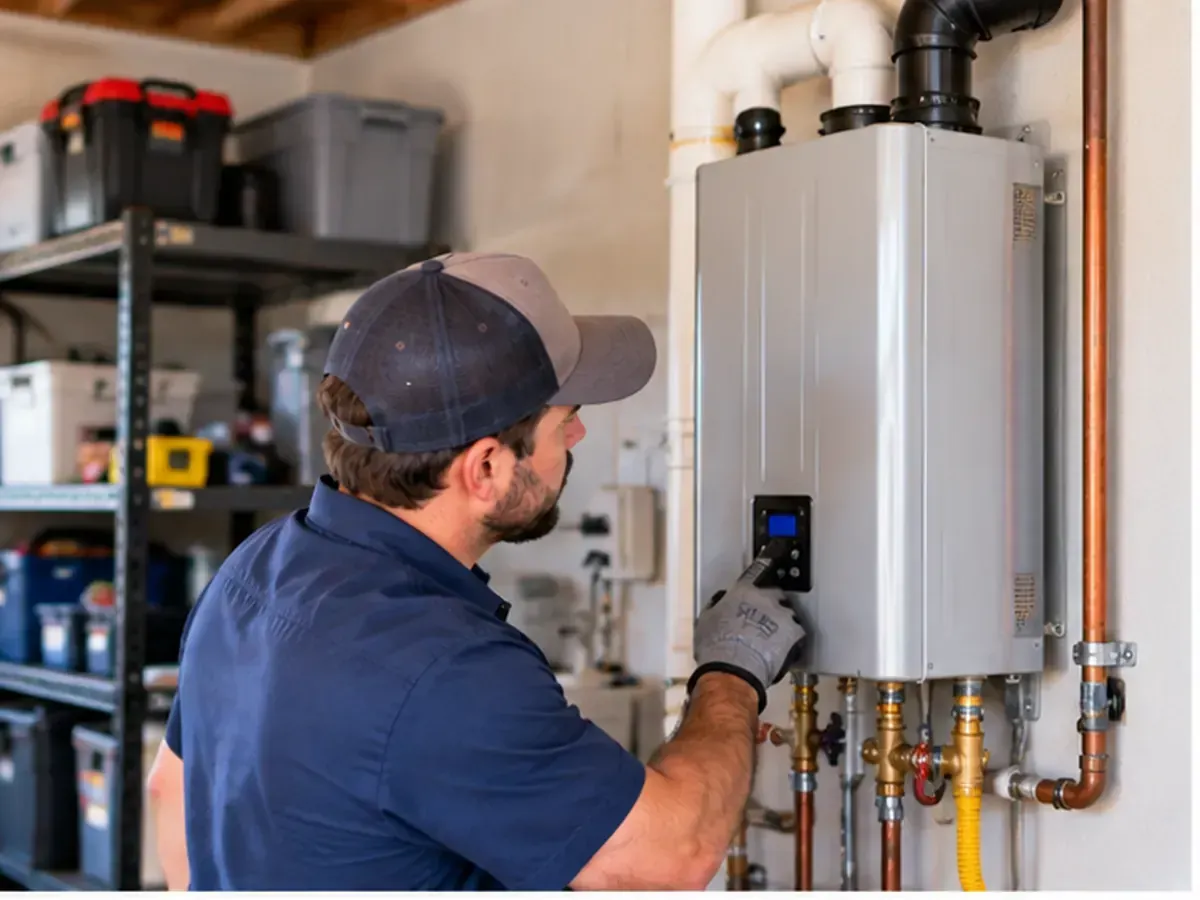
A tankless service call should first establish whether you are dealing with a repairable operating problem, overdue maintenance, an undersized system, or a project that requires new equipment or a larger conversion.
Tankless problems are often more useful to diagnose by symptom and error history than by guessing at a single failed part.
The displayed code can narrow the diagnostic path, but it should be interpreted with the model, operating conditions and service history.
Fuel supply, ignition components, sensors, venting or control conditions can all be relevant depending on the unit.
Low flow, competing fixtures, scale, sensors, recirculation or system capacity can contribute to inconsistent water temperature.
Filters, scale, plumbing restrictions or demand beyond rated output can affect what reaches the fixtures.
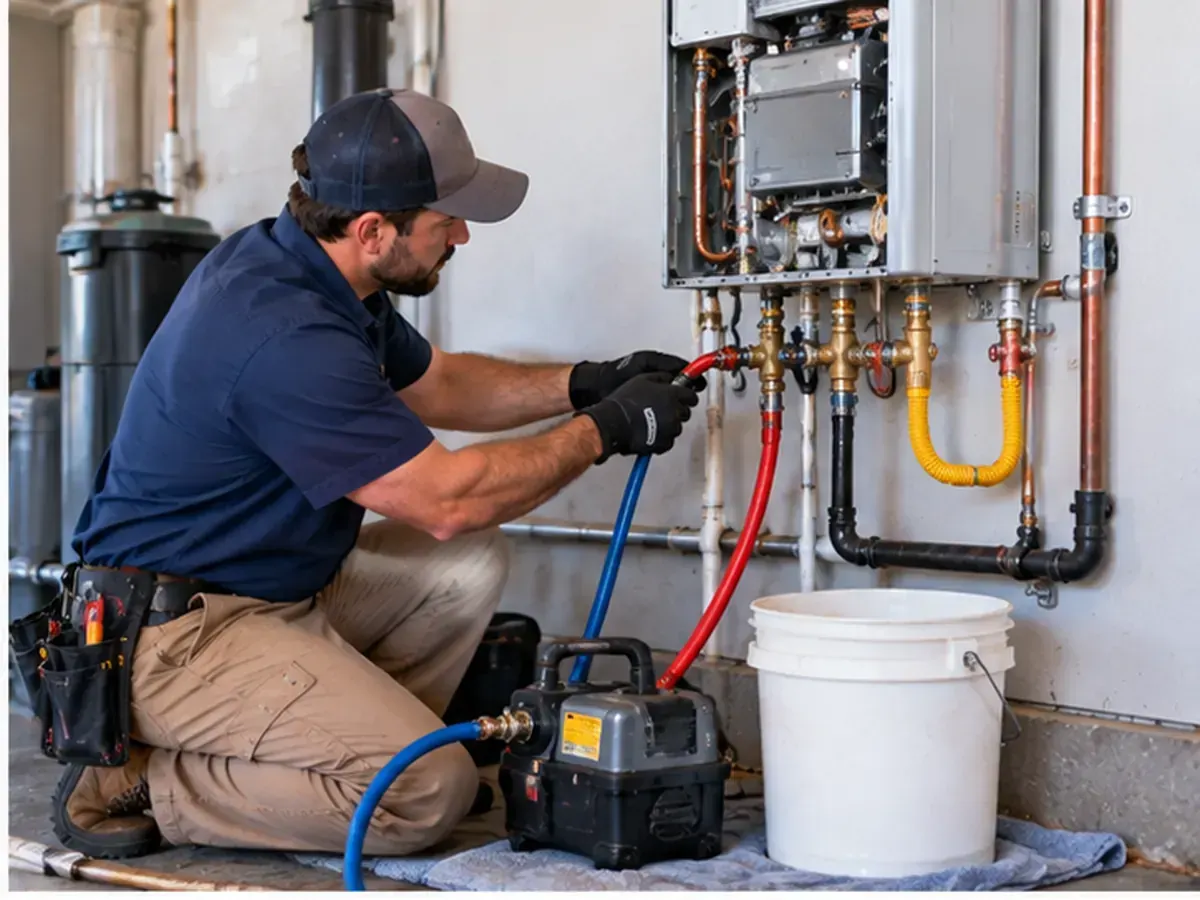
Tankless heat exchangers have narrow internal water passages. Mineral scale can reduce heat transfer and contribute to performance problems over time. Manufacturer guidance commonly includes periodic flushing and cleaning of the inlet screen filter, with frequency influenced by water quality and use.
The City's 2024 water-quality report lists hardness around 100 mg/L as CaCO₃. That supports reasonable scale-maintenance planning without treating every tankless problem as a “hard water” problem.
Tankless sizing is not based on a storage-tank gallon number. The important questions are how many fixtures may need hot water at the same time and how much temperature rise the heater must provide between incoming water and the desired outlet temperature.
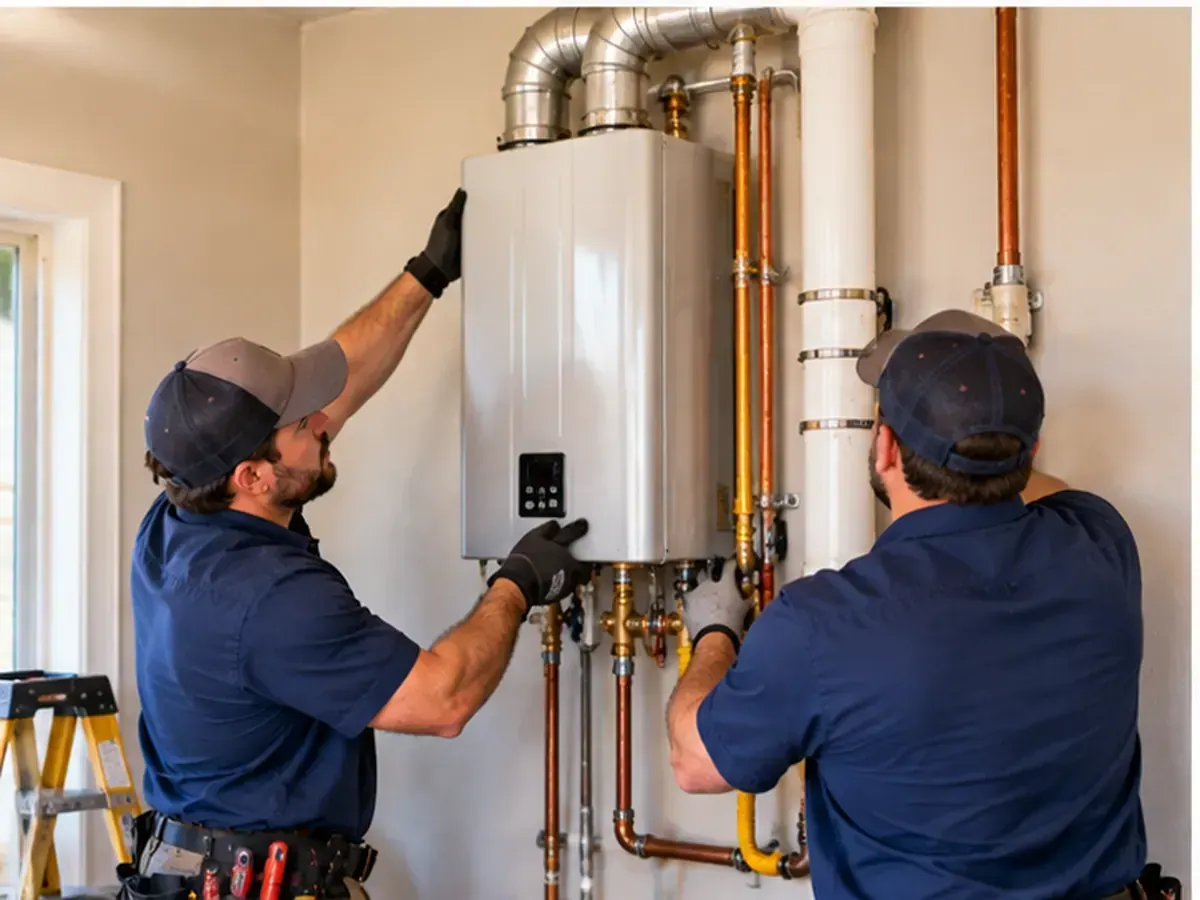
Tankless equipment can have substantially different infrastructure requirements from a standard storage heater. The conversion scope depends on the specific unit and property.
Gas-fired models can have high input rates. Available supply and piping should be evaluated for the selected equipment.
Electric tankless equipment can place significant demand on the electrical system and may require substantial circuit capacity.
Gas models require venting appropriate to the appliance, installation location and manufacturer instructions.
Condensing units can require condensate handling, while all units need practical access for future maintenance.
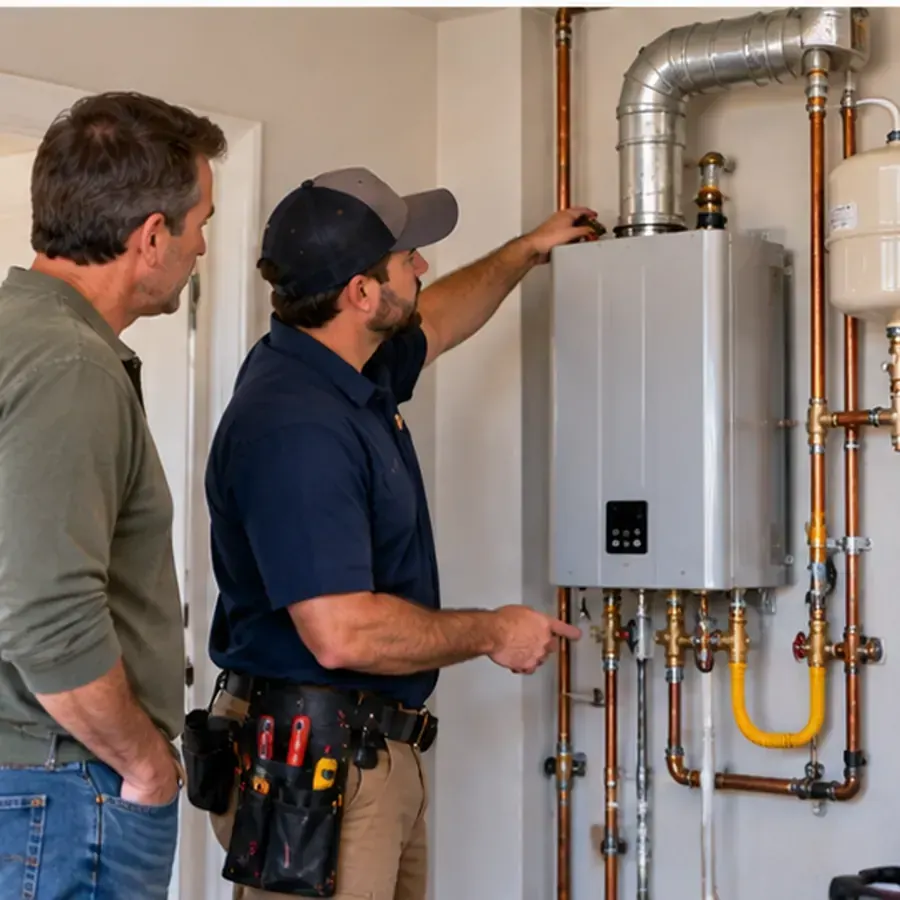
The City of Schertz requires plumbing permits for water-heater replacement and plumbing in new installations. Depending on the project, electrical, gas or other regulated work can also affect the permit scope.
For non-exempt electrical work submitted on or after September 1, 2026, Schertz applies the 2026 National Electrical Code.
Schertz's water system primarily uses groundwater, and its 2024 report lists hardness around 100 mg/L as CaCO₃. That is useful maintenance context for tankless heat exchangers, but not a universal diagnosis.
Tankless equipment can often be serviced without replacement. The useful decision depends on what failed, whether the heat exchanger and major components remain viable, how often problems return, and whether the unit was correctly sized and installed in the first place.
Error codes, sensors, ignition components, valves or controls may be serviceable depending on the diagnosis.
Scale flushing, filter cleaning and manufacturer-prescribed service may restore or protect performance.
Flow, gas supply, venting, recirculation or other setup problems can sometimes be the real issue.
Replacement becomes more relevant when major components fail, problems repeat or the system no longer fits the home.
A new tankless unit will not fix an undersized gas line, insufficient electric service, poor venting, excessive demand or neglected scale by itself.
The process changes depending on whether the unit is being repaired, maintained or installed.
Repair, maintenance, replacement or a new tankless installation.
Model, error code, symptoms, service history and current operating conditions.
Compare fixture demand with the unit's actual capacity and required temperature rise.
Gas or electrical capacity, venting, plumbing, condensate and service access.
Flush, clean filters or repair components where diagnosis supports it.
Select a unit that fits demand and the home's infrastructure.
Complete connections and verify ignition, temperature, flow and leak-free operation.
Finish applicable Schertz inspection requirements for permitted work.
Practical answers for existing tankless systems and homeowners considering a conversion.
Homes in Greenshire, Woodland Oaks, Forest Ridge, Carolina Crossing, Jonas Woods, Rhine Valley, The Crossvine, Homestead, Riata and Scenic Hills can have different gas, electrical, venting and installation-space conditions.
The neighborhood does not determine whether tankless is a good fit. The specific home's demand and infrastructure do.Error codes can point toward ignition, venting, flow, temperature, scale, sensor or other system conditions. The code is a diagnostic starting point, not a complete diagnosis by itself.
Temperature fluctuation can relate to flow rate, demand exceeding unit capacity, scale, sensors, mixing fixtures, recirculation setup or other system conditions. The actual cause should be diagnosed.
Tankless sizing should consider the maximum hot-water flow needed at one time and the temperature rise required between incoming water and the desired outlet temperature.
Periodic flushing may be needed to manage mineral scale in the heat exchanger. Maintenance frequency depends on water quality, use and manufacturer guidance.
Tankless systems can provide continuous hot water when demand stays within the unit's capacity. If simultaneous fixture demand exceeds rated output at the required temperature rise, performance can drop.
The City requires plumbing permits for water-heater replacement and plumbing in new installations. Depending on the project, electrical or other regulated work can also affect the permit scope.
Start with the main Water Heater Repair page, or compare every live service from the Services hub.
For repair, include the error code and symptoms. For installation, tell us about the current water heater, fuel type, household demand and where the new unit would go.