
Tank Flushing
- Drain accumulated sediment
- Check drain-valve operation
- Watch for unusual debris or discoloration
- Restart and verify operation
Routine maintenance is about protecting performance, identifying small problems early and reducing avoidable sediment or corrosion-related wear. For tank water heaters, that usually means looking beyond a simple drain-and-refill and checking the condition of the tank, safety valve, anode rod, connections and heating system.
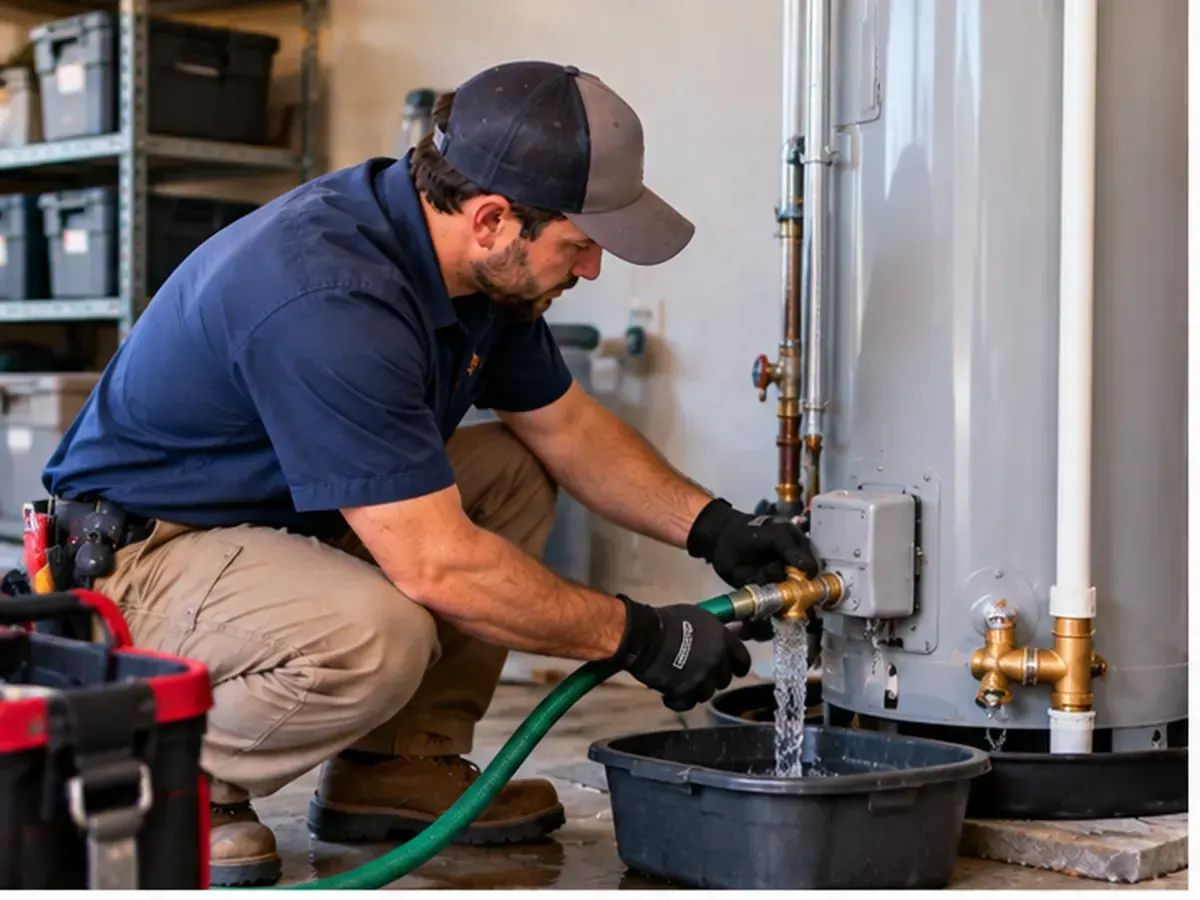
A useful maintenance visit should focus on the parts and conditions that affect performance, tank protection and early warning signs.
Minerals and debris can settle at the bottom of a storage tank over time. As that layer grows, it can contribute to rumbling, slower recovery and additional stress on heating surfaces.
Noise during heating can be associated with sediment collecting around the bottom of the tank.
Heavy buildup can interfere with efficient heat transfer and make the heater work harder.
Visible mineral debris during draining can show what has accumulated inside the tank.
A heater that has gone years without service may need a more cautious assessment before aggressive flushing.
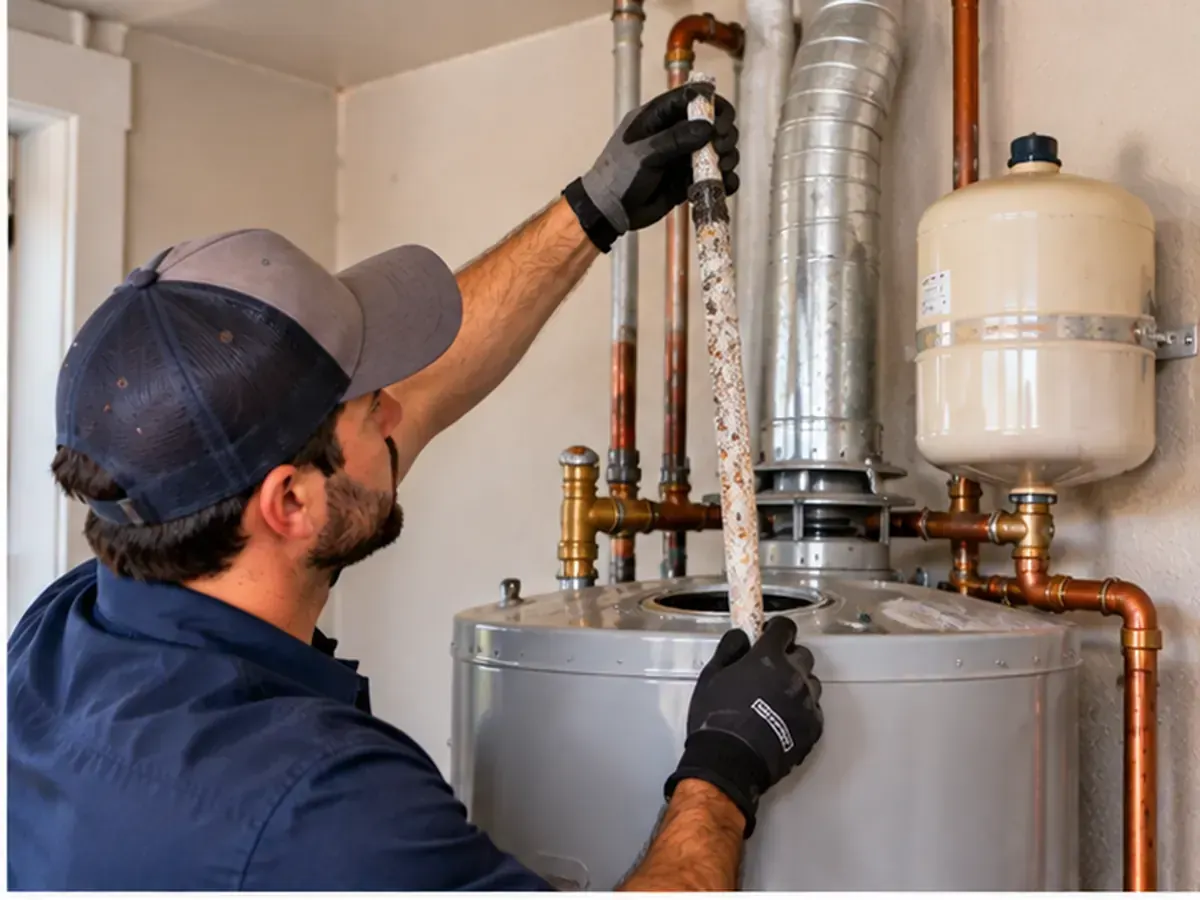
Steel storage tanks commonly use a sacrificial anode rod. Its job is to corrode preferentially so the steel tank is better protected from internal corrosion. The rod's condition depends on water chemistry, hot-water use and the system itself.
A. O. Smith recommends regular anode inspection because actual depletion varies significantly by water conditions and use.
The temperature and pressure relief valve is a safety device. Maintenance should also look at signs of leakage, corrosion, thermal expansion and unusual system pressure rather than assuming a dripping valve itself is always the root problem.
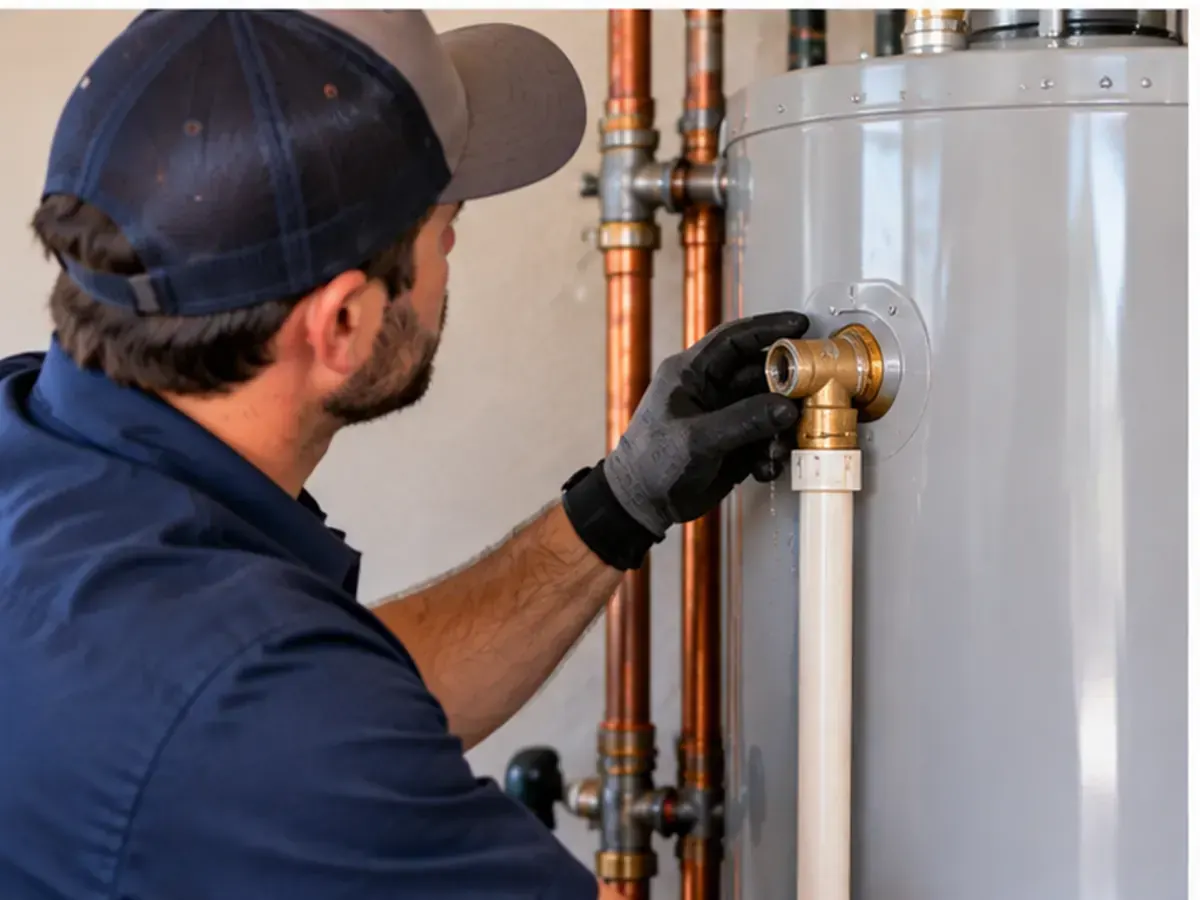
Tank flushing and corrosion inspection matter to both, but the heating system around the tank is different.
Burner condition, combustion area, venting and gas-system operation may be part of maintenance or inspection.
Element performance, thermostats, wiring and electrical connections can affect recovery and heating consistency.
Tankless units use a different maintenance approach, typically focused on descaling, inlet filtration and manufacturer-specific service.
Age, corrosion, leak history and whether the tank has ever been serviced should influence how aggressively maintenance is approached.
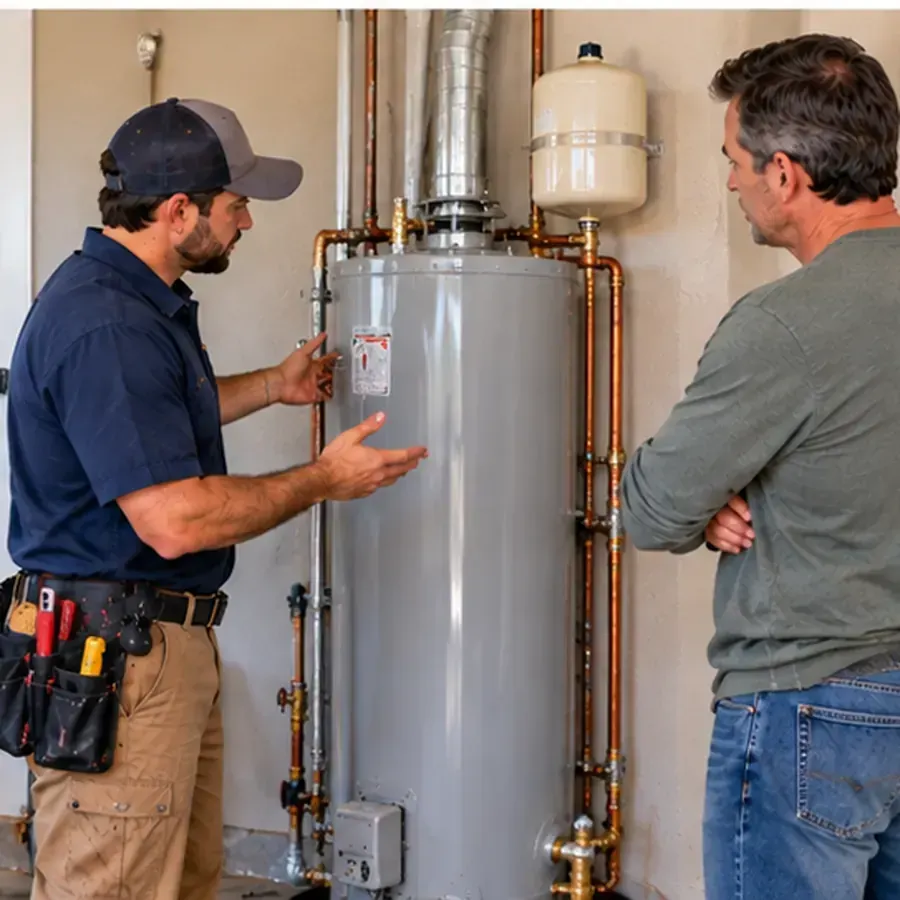
Schertz publishes annual drinking-water quality reports, and water chemistry can influence how quickly scale or sediment develops inside water-heating equipment.
That does not mean every Schertz water heater needs the same flushing schedule. Manufacturer guidance, water quality, household use, heater age and actual sediment conditions should all influence the maintenance interval.
Routine maintenance that does not alter regulated plumbing or electrical systems is different from replacement or permanent wiring/plumbing modifications, which can trigger permit requirements.
Maintenance can improve operating conditions and reveal developing problems, but it should not be used to hide a failure that already needs repair or replacement.
Flushing, inspection and preventative checks when the heater is otherwise operating normally.
Heating, ignition, control, element, valve or connection problems that require diagnosis and correction.
Water around the heater should be traced to a fitting, valve, connection or the tank itself.
A compromised tank, significant corrosion or repeated failures can make maintenance the wrong next step.
Older or heavily corroded tanks that have never been maintained may need a condition assessment before aggressive flushing.
A maintenance visit should finish with the heater operating normally—not just an empty tank.
Age, model, fuel type, symptoms, maintenance history and visible condition.
Inspect the tank, connections, valves and surrounding area before draining.
Turn off the relevant energy source and isolate water according to the equipment.
Drain and flush the tank where condition and manufacturer guidance support it.
Review anode condition, relief valve and other serviceable maintenance items.
Review burner/venting on gas units or heating components on electric units as appropriate.
Restore water and energy in the correct sequence and purge air where required.
Check temperature, leaks, recovery and normal system behavior after service.
Practical answers for flushing, sediment, anode rods and preventative service.
Homes in Greenshire, Woodland Oaks, Forest Ridge, Carolina Crossing, Jonas Woods, Rhine Valley, The Crossvine, Homestead, Riata and Scenic Hills can have different water-heater ages, locations, water use and maintenance histories.
The neighborhood itself does not set the maintenance schedule. The heater, water conditions, use and manufacturer guidance do.Many manufacturers recommend routine flushing, often around once per year for typical conditions, with frequency adjusted for water quality, use and manufacturer guidance.
Flushing helps remove loose sediment and mineral debris that settle at the bottom of a storage tank.
The sacrificial anode rod helps protect a steel tank from internal corrosion by corroding in place of the tank lining.
Yes. The temperature and pressure relief valve is a safety device and should be inspected according to the water-heater and valve manufacturer instructions.
No. Maintenance can reveal leakage and help identify its source, but a compromised tank body is not corrected by flushing or routine maintenance.
No. Maintenance can reduce sediment, reveal leaks or corrosion and help protect components, but it cannot prevent every future failure.
Start with the main Water Heater Repair page, or compare every live service from the Services hub.
If you know when it was last flushed or inspected, include that. If not, the current age, fuel type and any noise, discoloration or leakage are useful starting points.