
Household demand
Number of people, bathrooms, simultaneous showers, large tubs, dishwasher use and peak demand.
Installing a water heater is not just a matter of choosing a tank size and connecting two pipes. The right installation depends on how much hot water your household actually uses, whether the home is set up for gas or electric equipment, where the heater is located, how much service access is available, whether venting or electrical work is needed, and what the City of Schertz requires for the project.
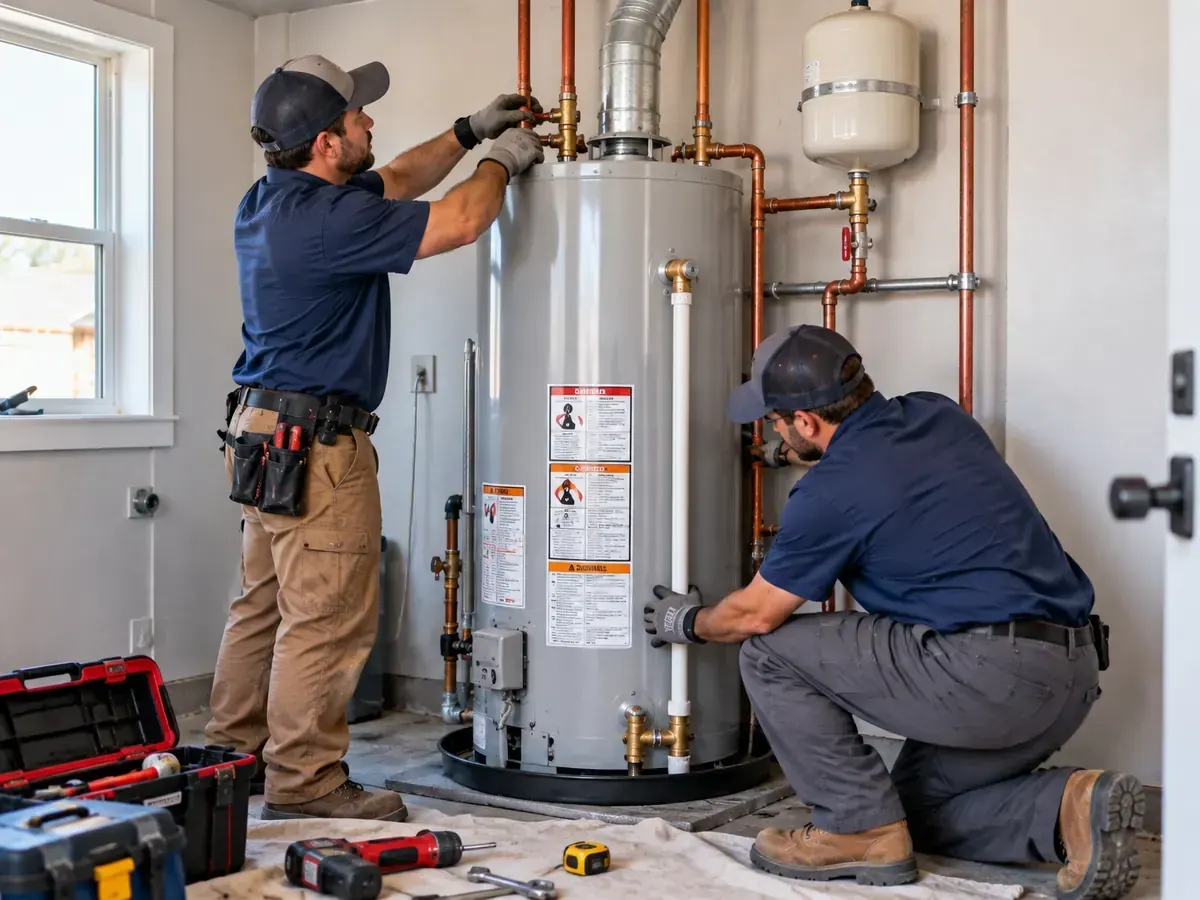
A common installation mistake is choosing equipment first and evaluating the home afterward. A water heater that looks suitable on paper may still be the wrong choice if the household routinely runs out of hot water, the available electrical service does not support the proposed unit, the gas supply is inadequate, the venting does not match, the installation area has limited clearance, or the existing piping layout needs modification.
Number of people, bathrooms, simultaneous showers, large tubs, dishwasher use and peak demand.
Gas supply, voltage, circuit capacity, breaker size, wiring condition and equipment requirements.
Door width, working clearance, drainage, vent route and future maintenance access.
Valves, piping, relief discharge, prior modifications and the condition of nearby connections.
The same goal—reliable hot water—can require very different installation conditions.
Often practical when existing plumbing is already configured for a tank and household demand fits the available capacity.
Gas installation may require evaluation of supply, shutoff, venting, combustion air, burner setup and nearby piping.
Electric installations depend on voltage, circuit capacity, breaker size, wiring condition and heater wattage.
A tankless conversion can require separate evaluation of gas or electrical capacity, venting, flow demand and drainage.
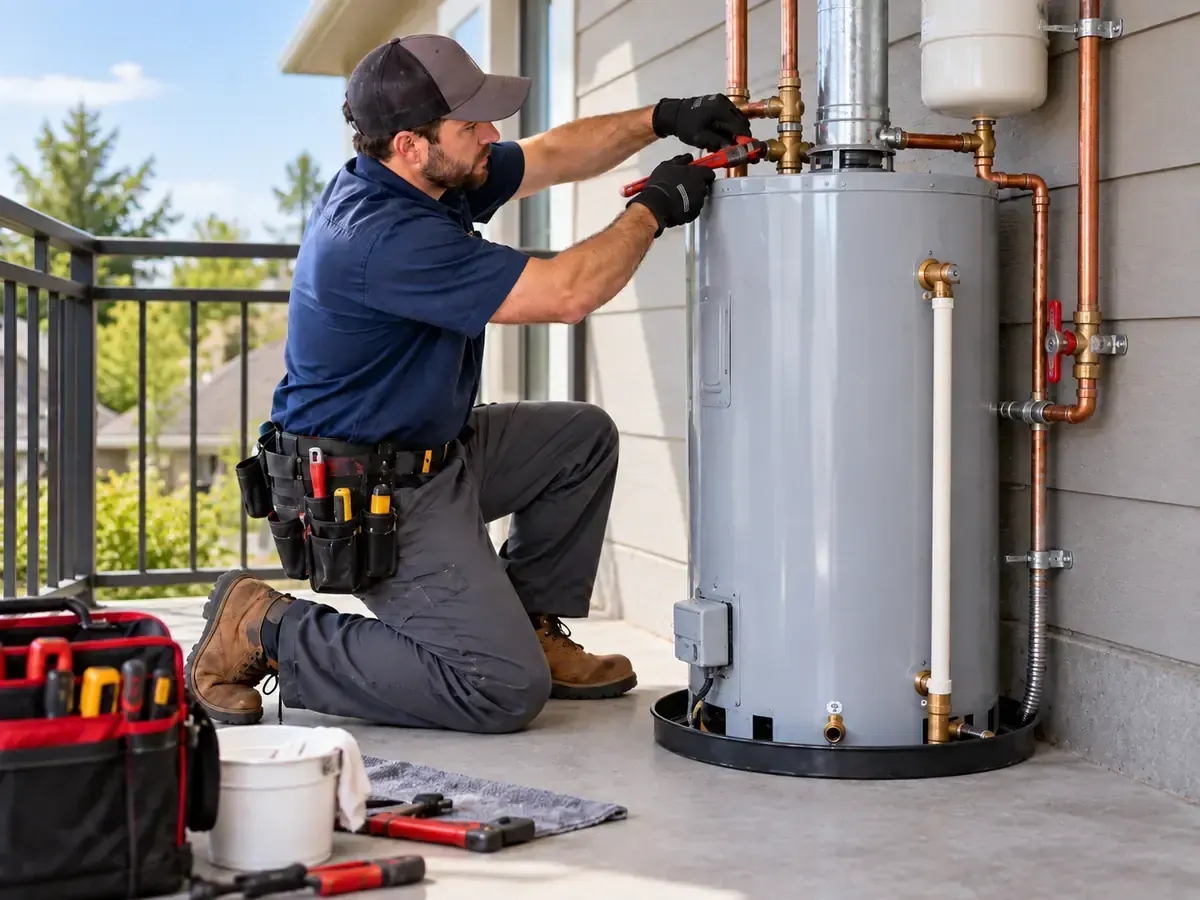
Water heaters in Schertz homes are not all installed in the same type of space. You may find equipment in garages, utility rooms, interior closets, laundry areas, mechanical rooms, tight storage spaces, or other dedicated utility locations.
Not automatically. Replacing or installing equipment based only on the old tank size can repeat an existing sizing problem. For storage-tank systems, first-hour rating can be more useful than gallon capacity alone because it shows how much hot water the system can realistically supply during a high-demand period.
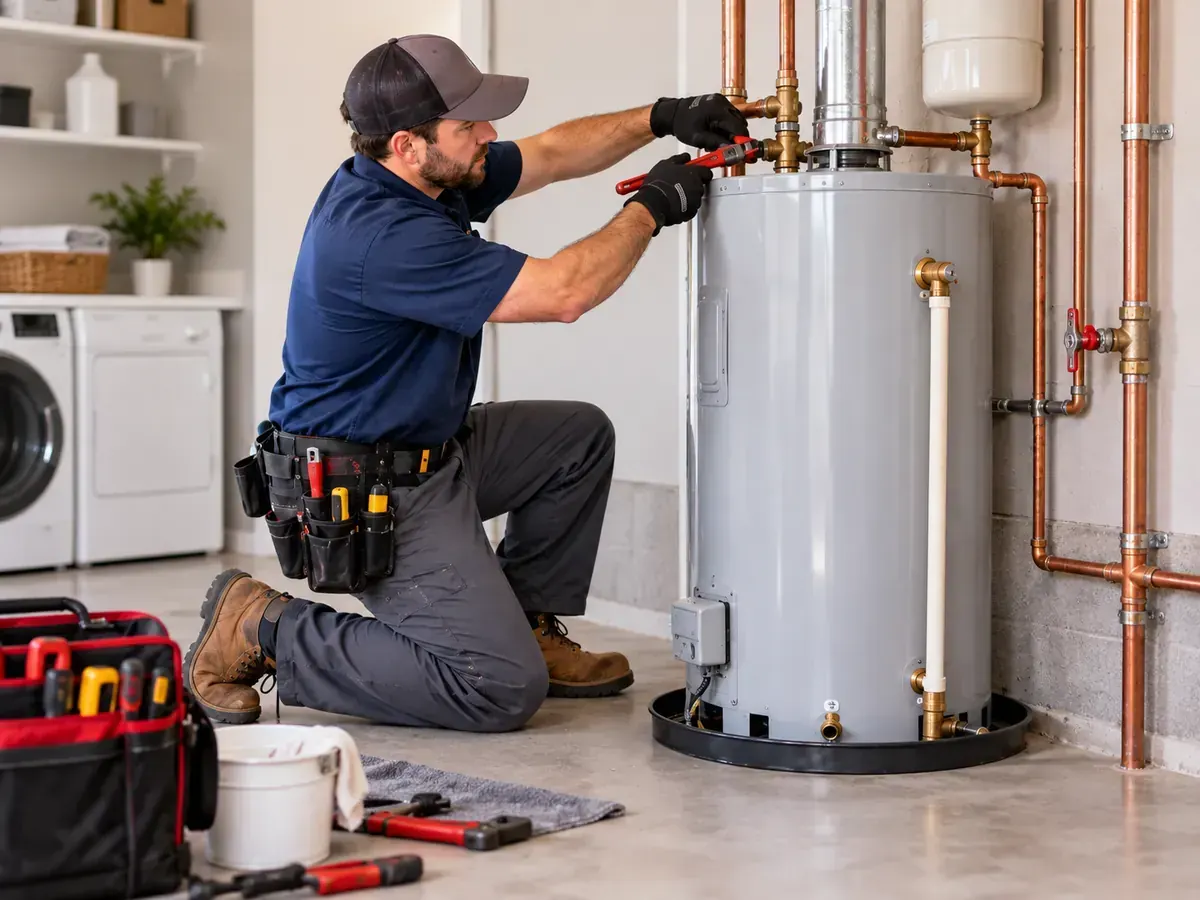
A new heater should not simply be attached to questionable connections. Installation is the right time to review the surrounding plumbing, fuel, electrical and access conditions.
Check shutoff valves, corrosion, supply connections, drain routing, relief discharge and previous modifications.
Switching between gas and electric can require supporting work beyond the water heater itself.
Moving the heater may also move plumbing, venting, electrical, fuel and drainage connections.
A larger or higher-output unit can change utility, venting, clearance and space requirements.
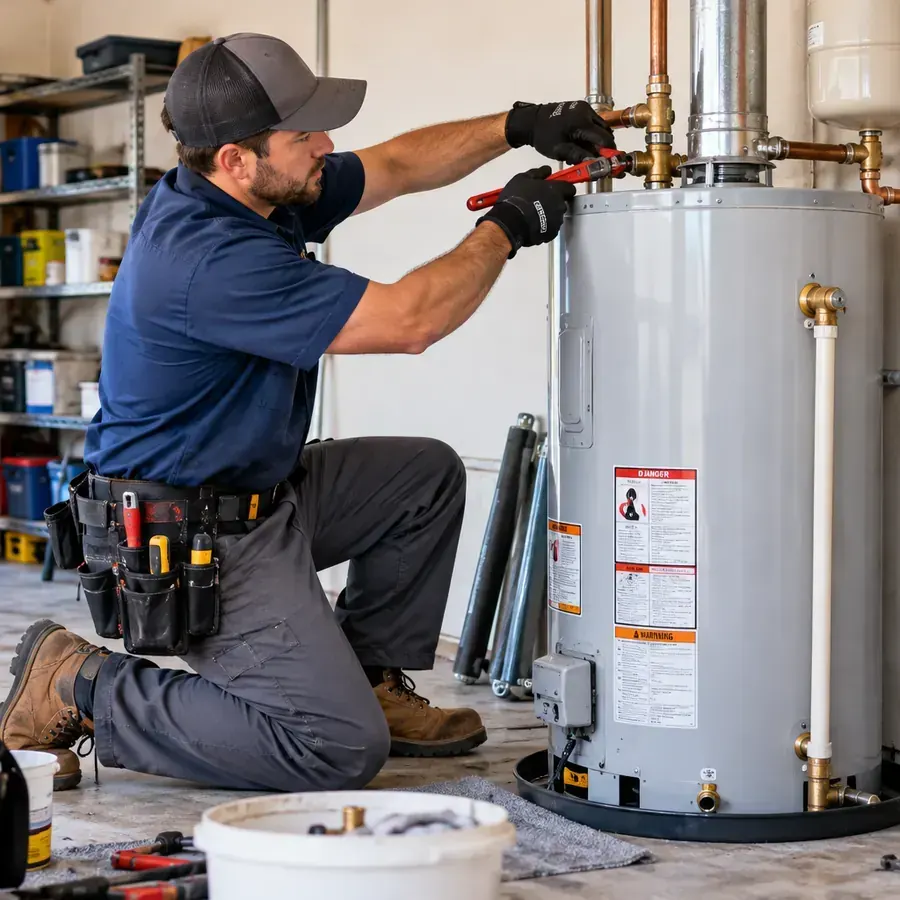
Schertz receives municipal water through local systems that include groundwater sources. Minerals can contribute to sediment accumulation in storage tanks and scale on some components over time. However, mineral content should not be used as a generic explanation for every water-heater problem.
The City of Schertz states that a plumbing permit is required for water-heater replacement and for plumbing in new installations. Permitted work also requires inspection.
For applicable electrical work, Schertz currently applies the 2026 National Electrical Code to permit applications submitted on or after September 1, 2026.
A like-for-like installation and a tank-to-tankless conversion should not be treated as the same project. The useful question is what work the property actually requires.
Tank vs. tankless, gas vs. electric, capacity and efficiency.
Garage, closet, mechanical room, removal path and working clearance.
Plumbing, gas line, electrical, venting, drainage or relocation.
Applicable Schertz requirements need to be part of the project plan.
If the current heater has a repairable component problem—such as a thermostat, heating element, gas-control issue, ignition component, valve, electrical control or serviceable connection leak—diagnosis may make more sense than installation.
The exact work depends on the system, but a well-planned project generally follows this sequence.
System type, household demand, connections, access, utilities, venting and drainage.
Match the heater to demand, utilities, installation space and project goals.
Determine whether plumbing, gas, electrical, venting or drainage changes are needed.
Confirm the applicable City of Schertz requirements before installation begins.
If replacing an existing unit, safely disconnect and remove it and prepare the installation space.
Complete the appropriate plumbing, gas, electrical, venting, drainage and safety connections.
Check for leaks, heating operation, temperature, ignition where applicable, flow and connections.
Permitted work should receive the applicable City inspection before the permit is complete.
Useful answers before choosing equipment or scheduling installation.
Homes in Greenshire, Woodland Oaks, Forest Ridge, Carolina Crossing, Jonas Woods, Rhine Valley, The Crossvine, Homestead, Riata and Scenic Hills can have different construction layouts, utility configurations, equipment locations and system ages.
The neighborhood name itself does not determine the installation. The specific home's plumbing, utilities, available space and hot-water demand do.The City of Schertz states that a plumbing permit is required for water-heater replacement and plumbing in new installations. Permitted projects also require inspection.
Not automatically. Household demand, first-hour performance, available space and the current system's performance should be considered before choosing the new unit.
Possibly, but it is more than an equipment swap. Gas supply, venting, installation location, plumbing, permitting and other project requirements must be evaluated.
Possibly. A tankless conversion needs separate evaluation of flow demand, fuel or electrical capacity, venting, installation space, drainage where applicable and maintenance access.
No. Oversizing can increase equipment cost and standby losses without solving the real problem. The heater should be sized around realistic household hot-water use.
Photos of the current heater and surrounding area, the rating label, fuel type, approximate household size, installation location and the reason for installing a new unit are useful starting points.
Start with the main Water Heater Repair page, or compare every live service from the Services hub.
A new water heater should fit the household's hot-water demand, the home's gas or electrical system, the installation location, existing plumbing, applicable venting and drainage needs, permit and inspection requirements, and future service access.